
AnKi 3D Engine - Vulkan and D3D12, modern renderer, scripting, physics and more
#game-engine #gamedev #engine #3d #rendering #opengl #vulkan #glsl #hlsl #cpp
 Panagiotis Christopoulos Charitos
a8ad256d20
Remove VRS SRI sanitation
Panagiotis Christopoulos Charitos
a8ad256d20
Remove VRS SRI sanitation
|
3 лет назад | |
|---|---|---|
| .github | 3 лет назад | |
| AnKi | 3 лет назад | |
| Docs | 4 лет назад | |
| EngineAssets | 4 лет назад | |
| Samples | 3 лет назад | |
| Sandbox | 3 лет назад | |
| Tests | 3 лет назад | |
| ThirdParty | 4 лет назад | |
| Tools | 3 лет назад | |
| .clang-format | 4 лет назад | |
| .gitattributes | 5 лет назад | |
| .gitignore | 5 лет назад | |
| CMakeLists.txt | 3 лет назад | |
| LICENSE | 3 лет назад | |
| README.md | 3 лет назад |
README.md

Twitter development news feed: twitter.com/anki3d
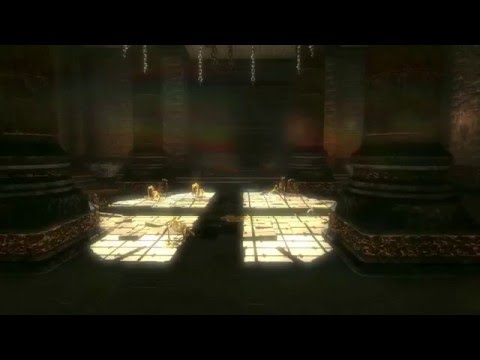
AnKi 3D engine is a Linux, Windows and Android opensource game engine that runs on Vulkan.
1 License
AnKi's license is BSD. This practically means that you can use the source or parts of the source on proprietary and
non proprietary products as long as you follow the conditions of the license.
See the LICENSE file for more info.
2 Building AnKi



To checkout the source type:
git clone https://github.com/godlikepanos/anki-3d-engine.git anki
AnKi's build system is using CMake. A great effort was made to ease the building process that's why the number of
external dependencies are almost none.
2.1 On Linux
Prerequisites:
- Cmake 3.10 and up
- GCC 5.0 and up or Clang 6.0 and up
- libx11-dev installed
- libxrandr-dev installed
- libx11-xcb-dev installed
- [Optional] libxinerama-dev if you want proper multi-monitor support
To build the release version:
$cd path/to/anki
$mkdir build
$cd ./build
$cmake .. -DCMAKE_BUILD_TYPE=Release
$make
To view and configure the build options you can use ccmake tool or other similar tool:
$cd path/to/anki/build
$ccmake .
This will open an interface with all the available options.
2.2 On Windows
Prerequisites:
- Cmake 3.10 and up
- Python 3.0 and up
- Make sure that the python executable's location is in
PATHenvironment variable
- Make sure that the python executable's location is in
- Microsoft Visual Studio 2017 and up
- Make sure that
Windows 10 SDK (xxx) for Desktop C++ [x86 and x64]component is installed
- Make sure that
To build the release version open PowerShell and type:
$cd path/to/anki
$mkdir build
$cd build
$cmake .. -G "Visual Studio 15 2017 Win64" -DCMAKE_BUILD_TYPE=Release
$cmake --build . --config Release
Alternatively, recent Visual Studio versions support building CMake projects from inside the IDE:
- Open Visual Studio
- Choose the "open a local folder" option and open AnKi's root directory (where this README.md is located)
- Visual Studio will automatically understand that AnKi is a CMake project and it will populate the CMake cache
- Press "build all"
2.3 For Android
Prerequisites:
- Android Studio
- From Android Studio's package manager you need to install
NDKandCMake - Having built AnKi for your host operating system (Linux or Windows)
Android builds work a bit differently from Linux and Windows. First you need to have built AnKi for your host operating
system. That's because Android builds requires the ShaderCompiler/ShaderCompiler.exe to compile the shaders for
Android. Then you have to generate a gradle project per build target.
For example, if you want to generate a project for the Sponza sample just type from a Linux terminal:
$cd path/to/anki
$./Samples/Sponza/GenerateAndroidProject.sh path/to/Bin/ShaderCompiler
or from a PowerShell terminal on Windows:
$cd path/to/anki
$./Samples/Sponza/GenerateAndroidProject.bat path/to/Bin/ShaderCompiler.exe
The GenerateAndroidProject scripts will generate a project in the root directory of AnKi. So for the Sponza sample
the script will create a directory named AndroidProject_Sponza.
Then you can open the AndroidProject_Sponza project from Android Studio and build it, debug it, run it etc.
3 Next steps
This code repository contains 4 sample projects that are built by default (ANKI_BUILD_SAMPLES CMake option):
Sponza: The Crytek's Sponza sceneSimpleScene: A simple scene (Cornell box)PhysicsPlayground: A scene with programmer's art and some physics interactionsSkeletalAnimation: A simple scene with an animated skin
You can try running them and interacting with them. To run sponza, for example, execute the binary from any working directory.
On Linux:
$./path/to/build/Bin/Sponza
On Windows just find the Sponza.exe and execute it. It's preferable to run the samples from a terminal because that
prints some information, including possible errors.
4 Contributing
There are no special rules if you want to contribute. Just create a PR. But before you do that, carefully read the code style guide.