
Lua Virtual Reality Framework
#gamedev #framework #lua #c #engine #script
 bjorn
53911dff0c
Update stb_image;
bjorn
53911dff0c
Update stb_image;
|
2 days ago | |
|---|---|---|
| .github | 3 months ago | |
| deps | 1 month ago | |
| etc | 2 days ago | |
| plugins | 4 months ago | |
| src | 2 days ago | |
| test | 2 days ago | |
| .gitignore | 4 years ago | |
| .gitmodules | 4 months ago | |
| CHANGES.md | 2 days ago | |
| CMakeLists.txt | 3 days ago | |
| LICENSE | 1 month ago | |
| README.md | 7 months ago |
README.md
LÖVR

A simple Lua framework for rapidly building VR experiences.
You can use LÖVR to easily create VR experiences without much setup or programming experience. The framework is tiny, fast, open source, and supports lots of different platforms and devices.




Homepage | Documentation | FAQ
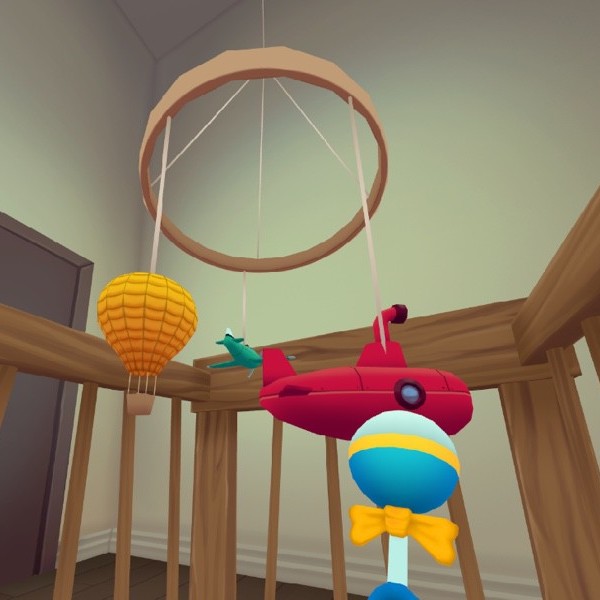
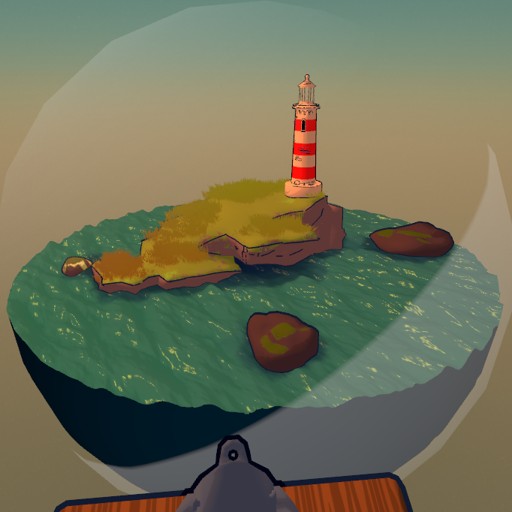
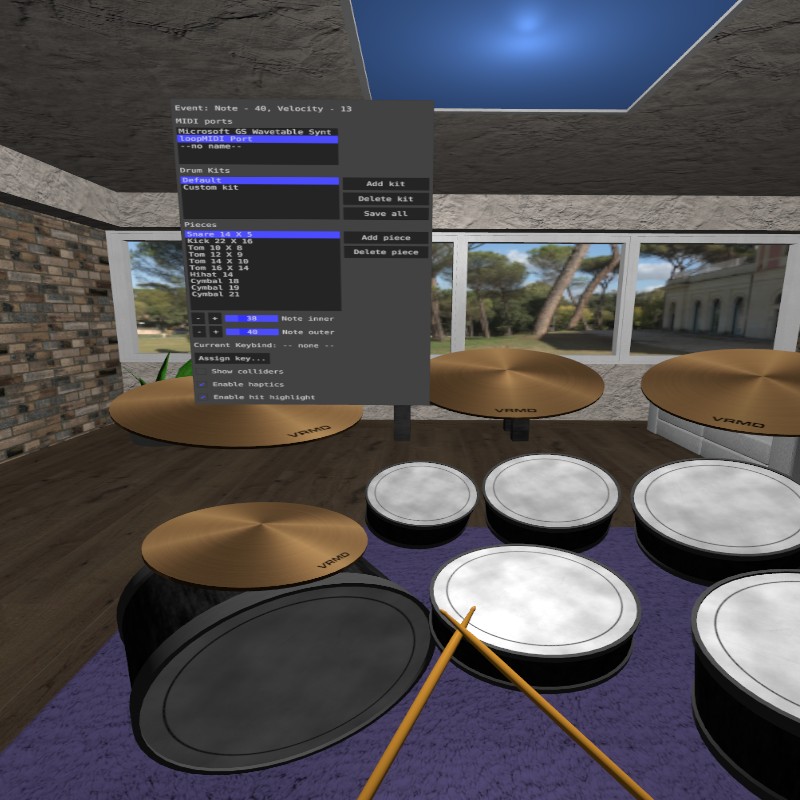
Features
- Cross-Platform - Runs on Windows, macOS, Linux, and Android.
- Cross-Device - Supports Vive/Index, Oculus Rift/Quest, Windows MR, and has a VR simulator.
- Beginner-friendly - Simple VR scenes can be created in just a few lines of Lua.
- Fast - Written in C11 and scripted with LuaJIT, includes optimized single-pass stereo rendering.
- Asset Import - Supports 3D models (glTF, OBJ), skeletal animation, HDR textures, cubemaps, fonts, etc.
- Spatialized Audio - Audio is automatically spatialized using HRTFs.
- Vector Library - Efficient first-class support for 3D vectors, quaternions, and matrices.
- 3D Rigid Body Physics - Including 7 collider shapes, triangle mesh colliders, and 6 joint types.
- Compute Shaders - For high performance GPU tasks, like particles.
Getting Started
It's really easy to get started making things with LÖVR. Grab a copy of the executable from https://lovr.org/downloads,
then write a main.lua script and drag it onto the executable. Here are some example projects to try:
Hello World
function lovr.draw(pass)
  pass:text('Hello World!', 0, 1.7, -3, .5)
end
Spinning Cube
function lovr.draw(pass)
  pass:cube(0, 1.7, -1, .5, lovr.timer.getTime())
end
Hand Tracking
function lovr.draw(pass)
  for _, hand in ipairs(lovr.headset.getHands()) do
    pass:sphere(vec3(lovr.headset.getPosition(hand)), .1)
  end
end
3D Models
function lovr.load()
  model = lovr.graphics.newModel('model.gltf')
end

function lovr.draw(pass)
  pass:draw(model, x, y, z)
end
More examples are on the docs page.
Building
You can build LÖVR from source using CMake. Here are the steps using the command line:
mkdir build
cd build
cmake ..
cmake --build .
See the Compiling Guide for more info.
Testing
Tests can be found in the test/lovr directory.
You can run all of LÖVR tests from the command line with the following:
./build/bin/lovr test
To run tests for a single module, pass the name of the module as an argument (e.g. this runs the tests for the data module):
./build/bin/lovr test data
Resources
- Documentation: Guides, tutorials, examples, and API documentation.
- FAQ: Frequently Asked Questions.
- Matrix: The LÖVR community for discussion and support.
- Nightly Builds: Nightly builds for Windows.
- Compiling Guide: Information on compiling LÖVR from source.
- Contributing: Guide for helping out with development 💜
- LÖVE: LÖVR is heavily inspired by LÖVE, a 2D game framework.
Contributors
License
MIT, see LICENSE for details.